
Choosing the right CNC Multifunctional Side Hole Drill can reshape an entire panel-processing workflow. It affects drilling accuracy, production speed, operator safety, and long-term maintenance costs. Yet many 2026 buying guides focus too heavily on spindle power and ignore daily usability.
A reliable machine should handle side holes, horizontal drilling, multiple panel sizes, and repeated production cycles without constant adjustment. Its value appears in small details: stable clamping, clean chip removal, accurate tool positioning, and software that operators can learn quickly. A machine may advertise impressive speed, but speed alone does not guarantee consistent results. That is where buyers often misjudge the investment.
Quality matters most.
Henry Ford’s manufacturing principle remains relevant: “Quality means doing it right when no one is looking.” For a CNC Multifunctional Side Hole Drill, that means examining hidden factors, including calibration stability, component quality, service response, and actual test samples. Manufacturers should provide clear specifications and verifiable performance data. Buyers should request demonstrations using their own materials, not only polished showroom panels.
This guide compares the strongest 2026 options through practical manufacturing criteria. It considers accuracy, flexibility, automation, maintenance, training, and total operating value. Some conclusions may remain imperfect because workshop conditions differ. A machine that performs beautifully in a controlled factory may struggle with dust, inconsistent boards, or rushed operators.
Real production is rarely perfect.
The best choice is not always the fastest model. It is the CNC Multifunctional Side Hole Drill that delivers dependable results under your real workload, staffing level, and budget.
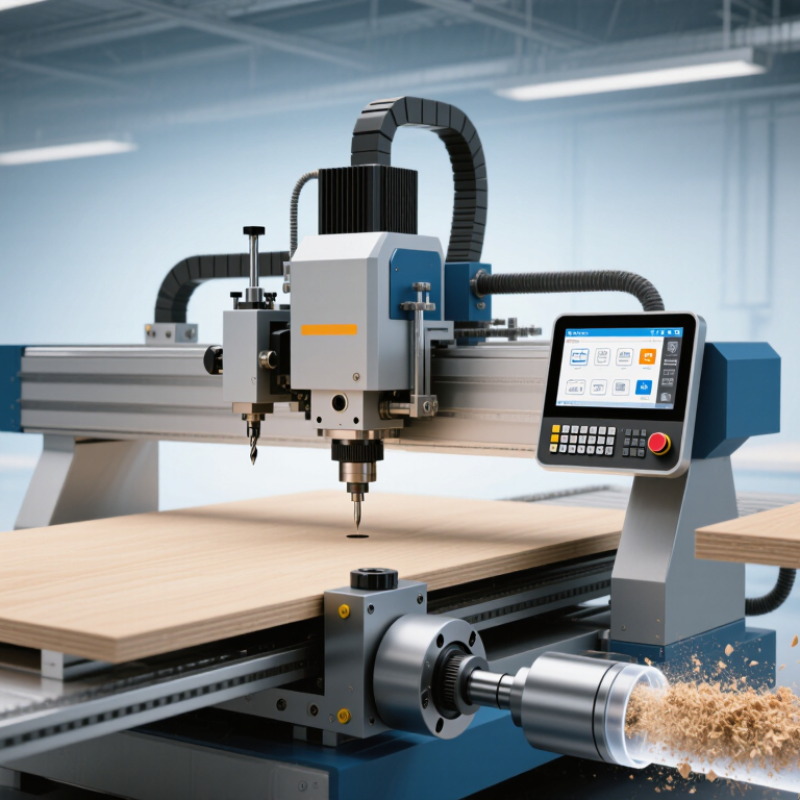
CNC side-hole drills are becoming more capable as furniture and panel work grows more complex. A three-axis machine handles basic vertical and horizontal drilling. Five-axis movement adds better access to angled holes and irregular panels. In practice, this reduces repositioning and alignment errors.
Spindle speed matters, but higher is not always better. A 10,000 rpm spindle suits many standard boards and larger bits. Speeds from 18,000 to 24,000 rpm can produce cleaner small holes when tooling and material are matched. Excessive speed may create heat, burning, or premature tool wear. I have seen operators blame the machine when the real issue was a dull bit or poor chip removal. That assumption needs checking.
A multifunctional side-hole drill should also offer rigid clamping and repeatable positioning. Thin panels can shift during drilling, even when the program is correct. Software simulation helps, but it cannot replace a physical trial. This is where machine specifications sometimes look better than daily production. Review spindle torque, axis accuracy, maintenance access, and operator training before choosing between three and five axes.
2026 Best CNC Multifunctional Side Hole Drill?
A strong side-hole drill begins with its spindle. A rigid, high-speed spindle reduces chatter around deep horizontal bores. Look for verified torque curves, not only maximum rpm. A 2024 International Federation of Robotics report recorded 541,302 industrial robot installations worldwide in 2023. That growth raises expectations for stable, repeatable machining cells. The spindle must recover quickly after every tool change.
ATC performance depends on more than magazine capacity. Check tool-change time, pull-stud alignment, chip protection, and sensor feedback. A 12-position magazine may outperform a larger one if tools remain clean. Clamping is equally practical. Pneumatic or hydraulic fixtures should hold narrow panels without crushing edges. Measure pressure at the fixture, not only at the machine inlet. Small pressure losses can create visible hole drift.
Coolant delivery is often underestimated. Targeted nozzles should reach the cutting edge, especially during angled or concealed drilling. The U.S. Department of Energy reports that compressed air can represent 10% to 30% of industrial electricity use. Leaking coolant or air lines therefore increase both operating cost and maintenance risk. Select filtration, recovery, and monitoring systems carefully. In real workshops, perfect chip evacuation is not guaranteed. I would test the machine with the actual panel material, tool length, and production cycle before choosing a “best” configuration.
For side-hole drilling, ±0.01 mm accuracy is a demanding specification. It describes the deviation from the programmed hole position. The 0.02 mm repeatability figure describes how closely repeated operations return to the same position. These values are not interchangeable. ISO 230-2:2014 separates positioning accuracy from repeatability during machine-tool testing. That distinction matters on cabinets, frames, and precision panels.
A reliable evaluation needs controlled evidence. Ask for test results from several axis positions, not one attractive sample. ASME B5.54 recommends checking machine performance through standardized positioning tests. NIST measurement guidance also stresses traceability, uncertainty, and environmental control. Temperature matters. A 1°C change can shift a long metal axis more than expected. Dust, clamp pressure, drill wear, and panel movement create additional error.
I would check the test method carefully. Was the 0.02 mm value measured unidirectionally or bidirectionally? Was the spindle warm? Were holes measured with a calibrated vision system or a basic gauge? Those details can change the meaning. In practical trials, record hole centers at the start, middle, and end of a production run. The machine may pass the brochure test, yet drift after hours of cutting. That is uncomfortable, but useful. A supplier should provide raw measurement data, calibration dates, sampling counts, and acceptance conditions before the machine is approved.
2026 Best CNC Multifunctional Side Hole Drill?
A reliable side-hole operation begins with a clean CAD model and confirmed board dimensions. Set the work origin on a visible reference corner. Define the drilling face carefully. In CAM, match the actual tool diameter, flute length, and material thickness. A 6 mm side hole may need a short peck cycle in dense panels. Keep the toolpath clear of clamps and unused geometry. Simulate the complete movement before cutting. Simulation is not optional.
During drilling, check the first panel at reduced feed speed. Listen for chatter, especially near the panel exit. A stable spindle sound usually indicates better cutting conditions. Measure hole position from two reference edges. Use a pin gauge or calibrated caliper for diameter checks. Inspect depth, edge breakout, and perpendicularity. Record the measured values. I still find small origin errors after careful setup. That is why a physical dry run remains valuable.
Tips: Keep a printed setup sheet beside the machine. Note tool numbers, offsets, feeds, and inspection results. Clear chips before measuring. Chips can hide breakout damage. If holes drift gradually, inspect clamping pressure and tool wear. Do not correct coordinates blindly. Test one change at a time. A perfect simulation cannot replace a real inspection, especially when the material varies between batches.
Representative workflow time for a CNC side-hole drilling cycle. Actual results vary with material, hole count, tooling, workholding, and inspection requirements.
How to read the chart: CAD/CAM setup and toolpath verification establish the machining strategy, drilling performs the cutting operation, and inspection confirms hole position and size before the part is released.
Choosing the best 2026 CNC multifunctional side hole drill starts with production data, not showroom claims. Measure panel thickness, hole diameter, drilling depth, and daily batch volume. A machine rated for 60 panels per hour may slow with mixed materials or frequent tool changes. Check spindle power, axis travel, clamping width, and dust extraction capacity. Leave service space around the machine. Tight layouts create hidden labor costs.
ISO documentation deserves close inspection. Ask for test records related to ISO 230-2 positioning accuracy and repeatability. Review safety design against ISO 12100 principles and relevant control-system requirements. Do not accept “ISO compliant” as a complete answer. Request the certificate scope, testing date, and responsible laboratory. Inspect sample holes personally. A clean first hole does not prove stable performance after eight hours.
ROI should include more than the purchase price. Calculate labor reduction, tooling, electricity, maintenance, training, scrap, and expected downtime. Compare those costs with monthly output and realistic selling margins. The first calculation is often wrong. My practical preference is a conservative payback model using 70% of the supplier’s claimed capacity. A slightly slower machine may deliver better value if it reduces setup errors and keeps hole positions consistent across long production runs. Ask about spare-part response times before signing anything. Reliability is measurable in details.
| Configuration Tier | Typical Workpiece Capacity | Side-Drilling Range | Spindle & Tooling | Recommended ISO Verification | Indicative Installed Cost | Estimated Throughput | Indicative Payback |
|---|---|---|---|---|---|---|---|
| Compact Entry | Panels and components up to approximately 1,200 × 600 × 80 mm; loads up to 300 kg | 4–16 mm drill diameter; side-hole depth up to approximately 60 mm | 5.5–7.5 kW; 6,000–12,000 rpm; ER32 or equivalent collet tooling | ISO 230-2 positioning test; ISO 10791 geometric accuracy; ISO 12100 risk assessment; ISO 13849-1 safety controls | US$45,000–75,000 | Approximately 12–25 parts per shift, depending on hole count and loading method | 18–30 months at 60% utilization and one-shift operation |
| Mid-Range Production | Panels and solid components up to approximately 2,400 × 1,200 × 150 mm; loads up to 800 kg | 5–25 mm drill diameter; side-hole depth up to approximately 100 mm | 9–15 kW; 8,000–18,000 rpm; automatic tool changer with 8–16 positions | ISO 230-2 repeatability and positioning report; ISO 10791 machine-tool acceptance checks; ISO 14121-1 or ISO 12100 risk evaluation; ISO 13849-1 safety validation | US$80,000–140,000 | Approximately 25–55 parts per shift, depending on fixture changes and programming complexity | 14–24 months at 70% utilization and one- to two-shift operation |
| Heavy-Duty Flexible | Large assemblies up to approximately 3,200 × 1,500 × 250 mm; loads up to 1,500 kg | 6–40 mm drill diameter; side-hole depth up to approximately 160 mm | 15–22 kW; 6,000–12,000 rpm; rigid tapping and 16–24-position automatic tool changer | ISO 230-2 volumetric or linear accuracy testing; ISO 10791 performance testing; ISO 16090-1 safety requirements for machining centres; ISO 13849-1 safety-related control validation | US$140,000–240,000 | Approximately 35–75 parts per shift, with suitable fixtures and material handling | 18–32 months at 75% utilization and two-shift operation |
| High-Volume Automated Cell | Repeat production of components up to approximately 4,000 × 2,000 × 300 mm; loads up to 2,500 kg | 6–50 mm drill diameter; side-hole depth up to approximately 200 mm | 18–30 kW; 6,000–15,000 rpm; 24–40-position tool management, probing, chip evacuation, and automated loading options | ISO 230-2 acceptance testing; ISO 10791 machining-centre tests; ISO 12100 machinery risk assessment; ISO 13849-1 or IEC 62061 functional-safety validation; documented calibration traceability | US$240,000–450,000+ | Approximately 60–140 parts per shift, depending on automation level and part mix | 24–42 months at 80% utilization and two- to three-shift operation |
| Cookie | Duration | Description |
|---|---|---|
| cookielawinfo-checkbox-analytics | 11 months | This cookie is set by GDPR Cookie Consent plugin. The cookie is used to store the user consent for the cookies in the category "Analytics". |
| cookielawinfo-checkbox-functional | 11 months | The cookie is set by GDPR cookie consent to record the user consent for the cookies in the category "Functional". |
| cookielawinfo-checkbox-necessary | 11 months | This cookie is set by GDPR Cookie Consent plugin. The cookies is used to store the user consent for the cookies in the category "Necessary". |
| cookielawinfo-checkbox-others | 11 months | This cookie is set by GDPR Cookie Consent plugin. The cookie is used to store the user consent for the cookies in the category "Other. |
| cookielawinfo-checkbox-performance | 11 months | This cookie is set by GDPR Cookie Consent plugin. The cookie is used to store the user consent for the cookies in the category "Performance". |
| viewed_cookie_policy | 11 months | The cookie is set by the GDPR Cookie Consent plugin and is used to store whether or not user has consented to the use of cookies. It does not store any personal data. |