How to Choose the Right Industrial Robots for Your Business?
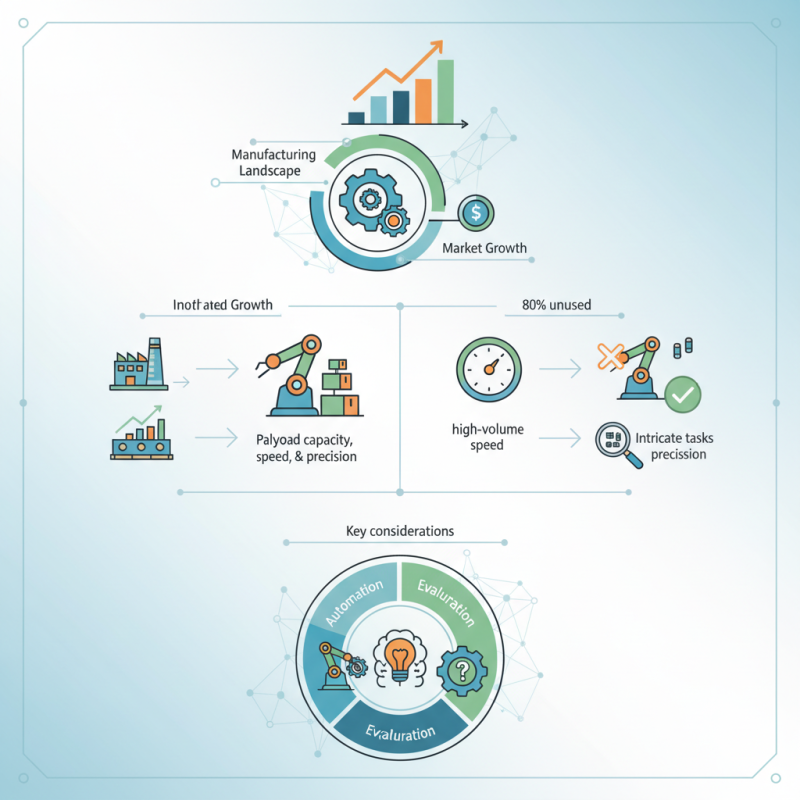
In today's manufacturing landscape, choosing the right industrial robots is essential for success. The global industrial robotics market is projected to grow from $41.8 billion in 2020 to $73.6 billion by 2026, reflecting a CAGR of 10%. Such numbers indicate a shift toward automation in various industries, including automotive and electronics.
Many businesses aim to enhance efficiency and reduce labor costs. Yet, selecting the appropriate industrial robots can be daunting. Factors like payload capacity, speed, and precision must be considered. Reports show that 80% of industrial robots go unused in some organizations, highlighting common misalignments with business needs.
Understanding specific requirements is crucial. For example, companies in high-parts-volume production may prioritize speed. In contrast, sectors focused on intricate tasks may require advanced precision. Without thorough evaluation, investments may lead to underperformance. As manufacturers face a growing need for innovation, it is vital to choose wisely and reflect on past decisions.
Understanding Your Business Needs for Industrial Automation
Understanding your business needs for industrial automation is crucial. Many companies overlook key factors when selecting robots. According to a report by the International Federation of Robotics, about
70% of manufacturing firms saying automation has boosted their productivity. This underlines the importance of accurately identifying specific operational goals.
Assess your requirements. Analyze current workflows and pinpoint areas that could benefit from automation. Will robotic arms help with repetitive tasks? Are collaborative robots necessary for intricate assembly processes? Utilize process mapping to visualize tasks that can be automated. Look into industry benchmarks; they often reveal average productivity increases by
30% after implementing robots.
Tip: Engage employees in the decision-making process. Their insights can uncover unique challenges and opportunities. Additionally, consider conducting a pilot program with a small-scale robot to evaluate its impact before full-scale implementation. This can be a good way to gauge effectiveness and make necessary adjustments.
Balancing technology and human skills is essential. Some businesses find it challenging to fully integrate robots due to workforce resistance. Training programs can ease this transition. According to a McKinsey report, companies that invest in upskilling employees see a
25% higher morale rate. Therefore, aligning robot capabilities with your team's strengths leads to a more effective automation strategy.
Identifying the Types of Industrial Robots Suitable for Your Industry
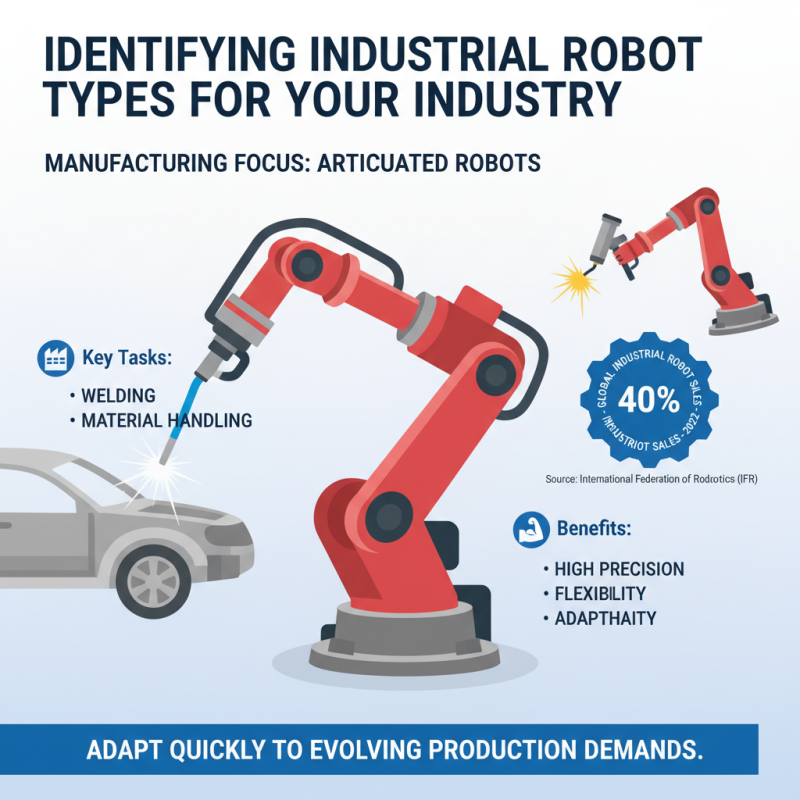
When selecting industrial robots, understanding the types suitable for your industry is crucial. For manufacturing, articulated robots are highly sought after. They can perform tasks like welding and painting with precision. Data from the International Federation of Robotics indicates that articulated robots accounted for 40% of total industrial robot sales globally in 2022. Such flexibility allows businesses to adapt quickly to varying production demands.
In the logistics sector, mobile robots are gaining traction. They enhance efficiency in warehouse operations by automating transport tasks. The research firm ABI Research projects a 50% increase in mobile robot deployments over the next five years. This indicates significant digital transformation within logistics, presenting opportunities for enterprises willing to invest in automation.
Consider your specific needs carefully. Every industry has unique challenges. For example, the pharmaceutical industry may require cleanroom-compatible robots, while food processing might prioritize hygiene standards. Properly aligning robot choice with these requirements can maximize productivity. It's a nuanced decision that merits serious reflection, ensuring you balance innovation with practicality.
Evaluating Key Features and Specifications of Industrial Robots
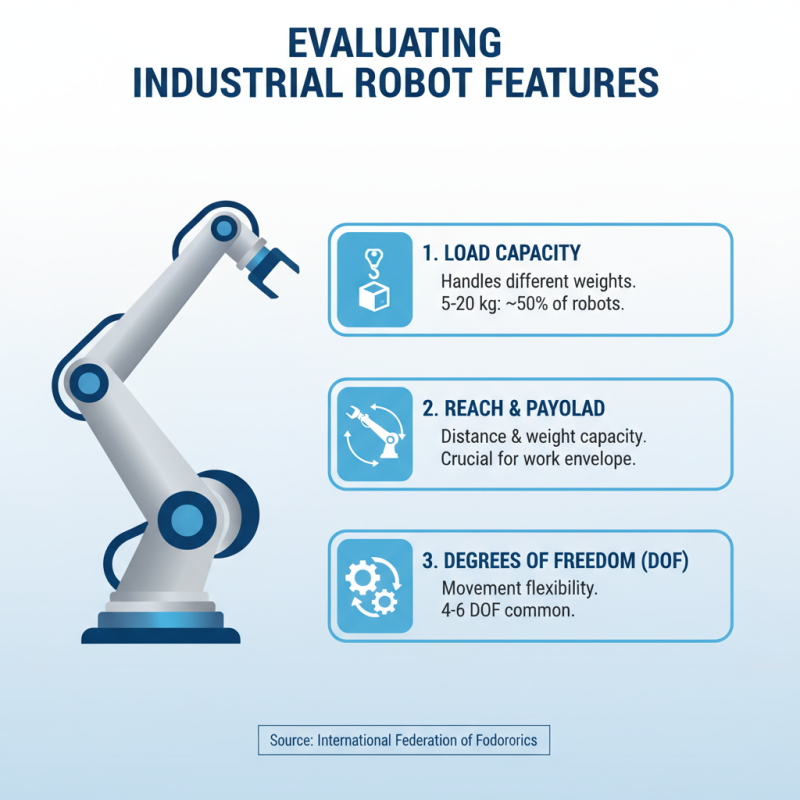
When selecting industrial robots, evaluating key features and specifications is crucial. Start by considering load capacity. Different robots handle various weights. For instance, a study by the International Federation of Robotics indicates that around 50% of industrial robots in use are designed to handle payloads between 5 kg and 20 kg. Understanding your requirements ensures an appropriate choice.
Speed and precision also matter. Robots with higher speeds can increase overall productivity. However, faster isn't always better. An increase in speed may lead to reduced accuracy. Research shows that around 30% of robot operators express concerns over quality control linked to excess speed. Balancing speed and precision is vital for optimal performance.
Tip: Create a checklist of must-have features based on your production needs. Assess each robot against this list to make a thoughtful decision.
Another critical specification is the robot's reach. Reach defines the area a robot can cover effectively. If your workspace is limited, a compact robot with a good reach might be ideal. However, those with longer arms could offer more versatility in larger spaces. A survey reveals that approximately 40% of manufacturing errors stem from inadequate reach assessments.
Tip: Consult industry reports or experts to gather insights on emerging trends and specifications in industrial robotics.
Assessing Budget and Total Cost of Ownership for Robotics Solutions
When investing in industrial robots, understanding the total cost of ownership (TCO) is critical. A 2022 report by the International Federation of Robotics (IFR) indicated that TCO extends far beyond the initial purchase price. Maintenance, energy consumption, and training needs can significantly impact long-term expenses. Businesses should analyze these factors carefully before committing to any robotic solution.
Another important consideration is the potential return on investment (ROI). According to a McKinsey study, automation can reduce operational costs by up to 30% in certain industries. However, this is contingent on the effective implementation of robotics. Failure to account for operational integration costs often leads to unanticipated budget overruns. A well-planned approach can prevent costly mistakes and improve overall efficiency.
Lastly, hidden costs often accompany technological upgrades. A basic robot may seem inexpensive, but its integration into existing systems can be complex. Upgrading infrastructure or reskilling staff can require substantial investment. Businesses must evaluate whether the benefits outweigh these hidden costs. A thorough analysis will provide clarity on expected financial outcomes, helping ensure a prudent investment in automation.
Cost Breakdown of Industrial Robots
Considering Vendor Support and Maintenance Options for Industrial Robots
When choosing industrial robots, vendor support and maintenance options are crucial. Many studies show that up to 70% of robotics failures stem from poor maintenance practices. Regular, professional maintenance ensures that machines operate efficiently and can prolong their lifespan. The right vendor will offer comprehensive support plans that include training, troubleshooting, and timely repairs.
Consider the quality and availability of customer support. A recent survey found that businesses prioritizing vendor support reported a 30% reduction in downtime. Fast access to expert help can make a significant difference. Evaluate if the vendor provides 24/7 support and whether they have local representatives for in-person assistance.
Maintenance options also vary widely. Some vendors offer preventive services, while others focus on reactive support. Companies should assess their operational needs to decide which model fits best. Data indicates that companies investing in preventive maintenance have seen up to a 40% reduction in unforeseen breakdowns. It's imperative to remember that having a solid support strategy can both enhance productivity and reduce total cost of ownership significantly.