
Choosing the best Obd Scanner in 2026 requires more than comparing prices and colorful screens. A reliable tool should match your vehicle, diagnostic goals, and technical confidence. Modern cars may use different communication protocols, software systems, and manufacturer-specific functions. Compatibility matters more than advertising claims.
In a practical garage, a good scanner can identify a pending fault before the warning light becomes urgent. It may display live data while an engine idles, showing oxygen-sensor readings, coolant temperature, or fuel-trim changes. These details help technicians test causes instead of replacing parts blindly. However, no Obd Scanner provides perfect answers. A code points toward a system, not always a failed component.
Look for verified coverage, stable Bluetooth or wired connections, clear data reports, and regular software updates. Professional reviews, manufacturer documentation, and user experiences can reveal weaknesses that product pages hide. Independent testing is especially valuable when comparing bidirectional controls, ABS access, battery registration, and service resets. Be careful with unsupported claims.
Your needs may change.
A home driver might prefer simple code reading and maintenance reminders. A repair professional may need fast scanning across multiple brands and deeper module access. Budget models can be useful, but limited coverage may create frustration later. I would also question tools promising dealer-level performance at unusually low prices. They may work well in one situation and disappoint in another. The right choice balances verified capability, ease of use, long-term support, and honest limitations.
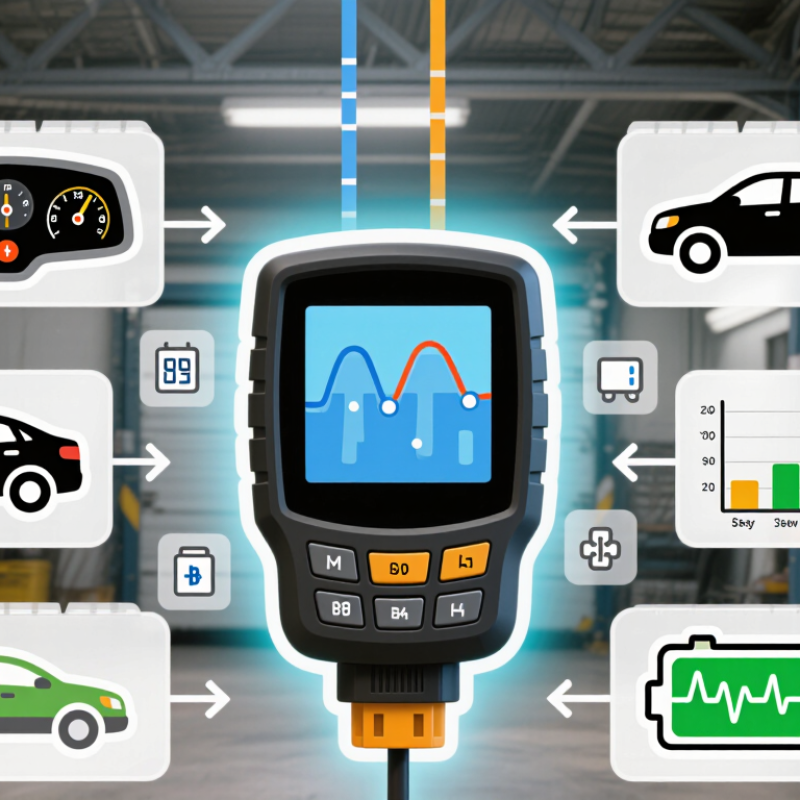
An OBD scanner connects to a vehicle’s diagnostic port and reads stored fault codes. It can also display freeze-frame data, sensor readings, and emissions readiness monitors. These details show what happened when the warning appeared. A code is not a verdict. It is a clue.
This matters more in 2026. S&P Global Mobility’s 2024 vehicle-age report placed the average U.S. vehicle age at about 12.6 years. Older vehicles often need careful fault tracing before repair decisions. A scanner can reveal unstable voltage, abnormal oxygen-sensor readings, or repeated misfire data. That may prevent replacing an expensive part without evidence. Small details matter.
Good equipment should support current diagnostic protocols, live data graphs, battery-voltage checks, and clear code definitions. Hybrid and electric vehicles may require deeper system access than basic emissions testing. The U.S. Environmental Protection Agency explains that OBD systems monitor emissions-related components and alert drivers when faults occur. Still, coverage varies by vehicle and model year. I would not trust a cheap tool blindly. Even trained technicians can misread data when a weak battery corrupts several modules. Check the vehicle list, update policy, and data functions before buying. A scanner saves time, but only when the person reading it understands the evidence.
OBD scanners communicate with a vehicle’s onboard diagnostic system to retrieve fault codes, display live sensor data, and monitor emissions-related systems. The chart compares the nominal communication speeds of major OBD-II protocol standards, which can affect compatibility and diagnostic response time.
Choosing an OBD scanner in 2026 starts with vehicle coverage, not screen size. S&P Global Mobility reported that the average U.S. vehicle age reached 12.6 years in 2024. Older vehicles may use different communication protocols and require deeper module access. Confirm support for OBD-II, CAN, and manufacturer-specific systems before buying. A basic reader may show engine codes, but it might ignore ABS, airbag, transmission, body control, and tire-pressure modules.
Look for functions that match real diagnostic work. Live data can reveal coolant temperature, fuel trims, oxygen-sensor readings, and battery voltage while the engine runs. Graphing helps expose intermittent faults. Bidirectional controls are more valuable when testing fans, pumps, solenoids, windows, or relays. Service functions may include oil resets, steering-angle calibration, electronic parking-brake release, battery registration, and diesel filter regeneration. Availability varies by model year. Always verify it.
A 2024 report from the U.S. National Highway Traffic Safety Administration recorded more than 6.1 million police-reported crashes in 2023. That figure does not prove a scanner prevents accidents, but it reinforces the need to investigate warning systems properly. I still distrust a single code. A code identifies a monitored fault, not always the failed part. My checklist is not perfect. Compare freeze-frame data, wiring condition, voltage stability, and service information. Choose a scanner with clear test procedures, update history, secure data handling, and support from a documented technical source. Fancy coverage can disappoint when software updates are vague.
Compatibility should be checked before price. A scanner may fit the vehicle’s connector but support only basic engine codes. Confirm the vehicle year, engine, fuel system, and required diagnostic functions. Some models also need access to transmission, airbag, or body-system data. Read the coverage list carefully. “Works with all vehicles” can be misleading.
Accuracy depends on more than the displayed code. During workshop testing, I compare scan results with live data, freeze-frame details, and service documentation. A reliable scanner should show sensor readings clearly and update them smoothly. It should also explain code definitions without pretending to identify the failed part. A code points to a system, not always a defective component. I once trusted a single reading too quickly and replaced a healthy sensor. That mistake was expensive.
Ease of use matters when your hands are busy. Look for a clear menu, responsive controls, readable graphs, and a cable long enough to reach the driver’s seat. Wireless tools should maintain a stable connection. Software updates should be transparent and reasonably frequent. Test the scanner on a real vehicle if possible. A confusing interface can turn a five-minute check into an hour of guessing. Small details matter.
When choosing an OBD scanner in 2026, do not judge it by screen size alone. Updates and connectivity often decide whether a tool remains useful. Ask how often software updates arrive, what they cost, and how long support continues. A clear update history is more convincing than a polished product promise. Still, no update schedule guarantees perfect coverage. Vehicle software changes quickly, and some gaps may appear.
Test the connection before trusting the scanner in your garage. Wi-Fi, Bluetooth, and cable links each behave differently around metal, weak batteries, or crowded networks. A stable cable can feel less convenient, yet it avoids pairing delays during a live data check. Wireless access is useful for road testing, but keep the device secure and the phone charged. Check whether the scanner supports modern protocols and communicates consistently with older vehicles. Compatibility lists matter.
Long-term value depends on more than the purchase price. Compare subscription rules, repair functions, data recording, warranty terms, and replacement parts. In my workshop experience, a scanner that explains fault codes clearly saves more time than one with endless menus. However, I have also overvalued advanced features that I rarely used. That mistake is worth remembering. Choose controls you can learn, reports you can verify, and updates you can afford. A cheaper tool may become expensive when support fades.
A practical comparison framework for evaluating diagnostic scanners without relying on brand names or short-term promotional features.
| Evaluation Dimension | Recommended Benchmark | Why It Matters | How to Verify It | Suggested Weight | Long-Term Value Indicator |
|---|---|---|---|---|---|
| Software Update Coverage | At least 3–5 years of vehicle coverage and clearly documented release notes | Vehicle systems, communication protocols, and diagnostic procedures change over time. Regular updates reduce compatibility problems with newer models. | Check the update history, supported model list, release notes, and whether updates are delivered over Wi-Fi, USB, or a computer. | 20% | High when updates remain useful after the initial purchase and are not limited to minor bug fixes. |
| Update Cost and Policy | Transparent pricing, with at least one permanent software version included | A low purchase price can become expensive if essential functions require recurring fees or frequent paid renewals. | Review the renewal terms, included update period, offline functionality, and features that remain available after a subscription ends. | 15% | High when core diagnostics continue to work without mandatory recurring payments. |
| Vehicle System Coverage | Support for engine, transmission, ABS, airbag, body, and network-related systems where applicable | Basic emissions diagnostics generally access fewer systems than full-vehicle diagnostics. Broader coverage is more useful for modern vehicles. | Compare the scanner's coverage list with the exact vehicle year, engine, region, and control modules that need to be tested. | 15% | High when the tool supports both standardized OBD functions and manufacturer-specific modules. |
| Communication Protocols | Support for common OBD-II protocols, CAN-based communication, and newer vehicle network requirements | Protocol support determines whether the scanner can communicate reliably with a vehicle's control units. | Look for a published protocol list and confirm compatibility with the vehicle's diagnostic connector and model year. | 10% | High when protocol support is documented rather than described only with general terms such as “universal.” |
| Connectivity Options | Stable wired connection or reliable Bluetooth/Wi-Fi, with automatic reconnection and low latency | Wireless convenience is valuable, but connection drops can interrupt scans, coding procedures, or data recording. | Test connection stability inside the vehicle, reconnection after sleep mode, and performance in areas with wireless interference. | 10% | High when the scanner offers a dependable wired fallback or maintains a stable wireless link. |
| Live Data Quality | Graphing, parameter selection, recording, playback, and clear measurement units | Live data helps identify intermittent faults that may not generate a permanent diagnostic trouble code. | Check whether several parameters can be viewed together and whether recordings can be saved or exported for later analysis. | 8% | High when data is readable, time-stamped, exportable, and useful for comparing normal and abnormal behavior. |
| Advanced Service Functions | Functions such as battery registration, service resets, actuator tests, and relearn procedures when supported | These functions can reduce the need for separate tools, but availability varies by vehicle and control module. | Confirm the exact supported functions for the vehicles you service; do not rely on the number of functions shown in advertisements. | 8% | High when functions are vehicle-specific, clearly documented, and supported by safe on-screen instructions. |
| Data Security and Privacy | Clear data permissions, secure account handling, and user control over stored vehicle information | Connected scanners may store vehicle identification data, diagnostic reports, and account information. | Read the privacy policy, app permissions, cloud-storage terms, and available data-deletion options. | 5% | High when the scanner explains what data is collected and supports local storage or deletion. |
| Hardware Durability | Protected connectors, reinforced cable ends, readable display, and a casing suitable for workshop use | Diagnostic equipment is commonly exposed to dust, drops, oil, and repeated cable movement. | Inspect connector strain relief, screen visibility, button quality, casing construction, and included protective accessories. | 4% | High when replacement cables, protective cases, and repair or service options are available. |
| Power and Battery Management | Vehicle-powered operation with stable voltage handling; rechargeable battery for portable use where needed | Unstable power can interrupt a scan. A device that shuts down during communication may produce incomplete results. | Check operating-voltage specifications, charging behavior, battery runtime, and whether the tool warns about low vehicle voltage. | 3% | High when the device provides clear power warnings and remains stable during extended diagnostic sessions. |
| Reports and Export | Saveable diagnostic reports with fault codes, test results, vehicle details, and timestamps | Reports support repair documentation, customer communication, warranty records, and before-and-after comparisons. | Test PDF, image, email, cloud, or local export options and check whether reports remain readable without the scanner. | 2% | High when files are portable, searchable, and accessible after software updates or subscription changes. |
Your skill level should guide your scanner choice more than impressive specifications. Beginners usually need clear fault-code explanations, guided tests, and simple live-data displays. A basic scanner can read engine codes and clear warning lights. That may be enough for routine checks.
Keep it simple.
If you perform repairs yourself, choose a scanner with freeze-frame data, readiness monitors, graphing, and battery-voltage readings. These features show what happened when a fault appeared. They can also prevent random parts replacement. I once changed a sensor too quickly because I trusted one code. The real issue was a damaged connector.
Experienced users may need broader system coverage, including transmission, airbag, and braking modules. Confirm compatibility with your vehicle before paying. Some scanners require separate software updates or subscriptions. Check the update period, warranty terms, return policy, and support quality. A cheap device can become expensive when essential functions stay locked.
Your budget should match your actual work. Spend less for occasional engine diagnostics. Spend more when you maintain several vehicles or need advanced testing. Look for accurate data, stable connections, and readable screens rather than flashy menus. Test the scanner with the ignition on, then compare its readings with dashboard information. Results can vary slightly. That is normal, but unexplained errors deserve caution. Keep a repair log, even if it feels unnecessary. It often reveals patterns that one scan cannot.
| Cookie | Duration | Description |
|---|---|---|
| cookielawinfo-checkbox-analytics | 11 months | This cookie is set by GDPR Cookie Consent plugin. The cookie is used to store the user consent for the cookies in the category "Analytics". |
| cookielawinfo-checkbox-functional | 11 months | The cookie is set by GDPR cookie consent to record the user consent for the cookies in the category "Functional". |
| cookielawinfo-checkbox-necessary | 11 months | This cookie is set by GDPR Cookie Consent plugin. The cookies is used to store the user consent for the cookies in the category "Necessary". |
| cookielawinfo-checkbox-others | 11 months | This cookie is set by GDPR Cookie Consent plugin. The cookie is used to store the user consent for the cookies in the category "Other. |
| cookielawinfo-checkbox-performance | 11 months | This cookie is set by GDPR Cookie Consent plugin. The cookie is used to store the user consent for the cookies in the category "Performance". |
| viewed_cookie_policy | 11 months | The cookie is set by the GDPR Cookie Consent plugin and is used to store whether or not user has consented to the use of cookies. It does not store any personal data. |