Why is Process Automation Technology Essential for Modern Businesses?
In today's fast-paced business environment, the role of process automation technology cannot be overstated. Experts like John Smith, a leading figure in automation solutions, emphasize its importance: "Process automation technology transforms how businesses operate, increasing efficiency and reducing costs." Companies are feeling the pressure to adapt swiftly.
Every organization faces unique challenges, from labor shortages to heightened customer expectations. Process automation technology addresses these issues head-on. For example, automating repetitive tasks frees employees to focus on higher-value activities. Yet, the implementation of these technologies isn’t always seamless. Businesses must navigate resistance from staff and integration issues with existing systems.
Additionally, while automation offers significant benefits, it's crucial to assess its impact. Some processes could become overly automated, losing the personal touch. Striking the right balance between automation and human involvement is essential. Ultimately, understanding the complexities of process automation technology can lead to more informed decisions for modern businesses striving to thrive in a competitive landscape.

The Definition and Scope of Process Automation Technology
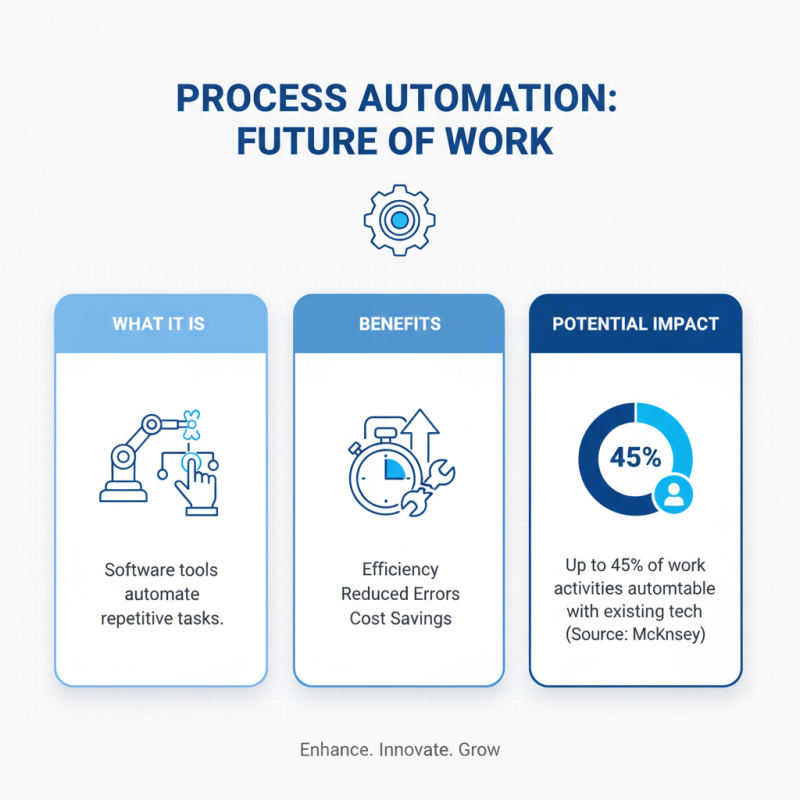
Process automation technology is a vital component of modern business operations. It refers to using software tools to automate repetitive tasks. This aspect of technology can significantly enhance efficiency and reduce human error. A report by McKinsey indicates that up to 45% of current work activities can be automated with existing technologies. This data underlines the vast scope and potential impact of process automation.
The essence of process automation lies in streamlining operations. Menial tasks like data entry or transaction processing can be automated, allowing employees to focus on more complex issues. A PwC study shows that 70% of business leaders believe automation increases productivity. However, organizations must navigate potential pitfalls. Resistance to change is common. Employees may feel threatened by automation, leading to pushback. Furthermore, implementing these technologies can be costly and time-consuming.
Understanding the full scope of process automation is critical. It goes beyond mere technical deployment. Businesses need a suitable strategy that encompasses training and adaptation. According to a Deloitte survey, only 15% of companies have a clear automation strategy. This reveals a gap in understanding how to leverage automation effectively. Investing in the right tools without strategic insight can lead to insufficient returns. Businesses must reflect on their readiness to embrace this change.
The Key Benefits of Implementing Process Automation in Businesses
In today's fast-paced business landscape,
process automation has become essential. Companies are constantly seeking ways to improve efficiency.
Automating repetitive tasks can save time and reduce errors. This allows employees to focus on more strategic tasks.
Simplifying workflows enhances productivity and boosts morale.
Implementing process automation yields significant benefits. It can lead to cost savings
by reducing manual labor. Errors in processes can be minimized, leading to increased accuracy.
Customer satisfaction often improves due to faster service delivery. Employees may enjoy a
better work-life balance.
Tips: Consider starting with small projects.
Gradually expand automation to other areas. Continuous improvement and feedback can enhance results.
Evaluate the tools available to ensure they meet business needs. Automating processes is not always flawless;
be prepared to adjust and learn.
Reflect on what works and what needs fine-tuning.
Common Applications of Process Automation Across Various Industries
Process automation technology is transforming various industries by streamlining operations. In finance, for instance, automation manages transaction processing and compliance efficiently. Many businesses experience significant reductions in errors and processing times. However, some organizations struggle with integrating new automation tools into their existing workflows.
In manufacturing, robotics and automation optimize assembly lines. These machines increase production speed and reduce costs. Yet, reliance on automation raises concerns about workforce displacement. The challenge lies in balancing efficiency with employee roles. Companies must consider training for reskilling their workforce.
The healthcare sector benefits tremendously from process automation. It improves patient record management and appointment scheduling. Automation allows healthcare providers to focus more on patient care. Still, the industry faces hurdles in data security and privacy concerns. Addressing these issues is as crucial as the benefits brought by automation.
Why is Process Automation Technology Essential for Modern Businesses? - Common Applications of Process Automation Across Various Industries
| Industry |
Common Applications |
Benefits of Automation |
| Manufacturing |
Production line automation, quality control |
Increased efficiency, reduced labor costs |
| Healthcare |
Patient management systems, billing automation |
Faster patient processing, reduced errors |
| Finance |
Transaction processing, compliance tracking |
Improved accuracy, quicker service |
| Retail |
Inventory management, order processing |
Enhanced customer experience, optimized stock levels |
| Logistics |
Shipping automation, route optimization |
Reduced delivery times, cost savings |
| Telecommunications |
Customer support automation, network management |
24/7 service availability, improved reliability |
Challenges and Considerations in Adopting Process Automation
The adoption of process automation technology comes with its own set of challenges. Many businesses hesitate to implement these solutions due to concerns about job displacement. According to a study by McKinsey, automation could displace up to 30% of the global workforce by 2030. This statistic raises valid questions regarding employee morale and the need for responsible transition plans.
Cost is another significant consideration. While process automation can reduce long-term operational costs by up to 30%, the initial investment can be substantial. Many smaller businesses struggle to find the capital to invest in advanced technologies. This financial barrier can make automation seem out of reach. Companies must weigh the upfront costs against potential savings to make informed decisions.
Moreover, integration with legacy systems can be complex. Many organizations still rely on outdated technology that may not support automated processes seamlessly. Reports indicate that up to 70% of digital transformation efforts fail due to integration issues. This highlights the need for a strategic approach, ensuring compatibility while achieving desired efficiency. Businesses must not overlook these challenges when considering process automation.
The Future of Process Automation and Its Impact on Business Success
The future of process automation looks promising. A recent report from McKinsey indicates that automation could increase global productivity by up to 1.4% annually. As businesses embrace this technology, they can expect significant enhancements in efficiency and accuracy. Studies show that organizations implementing automation can reduce operational costs by as much as 30%. This is not just about cutting tasks; it’s about transforming workflows.
However, automation is not without its hurdles. Many companies face challenges in integration and employee resistance. According to a survey by Deloitte, around 40% of employees fear job loss due to automation. This fear can lead to decreased morale and reduced effectiveness in operations. It's crucial for companies to address these concerns transparently.
Moreover, businesses need to continuously evaluate their automation strategies. While many achieve cost savings, some find that initial implementations don’t yield the expected results. For instance, a report from Forrester highlighted that 60% of automation initiatives fail. Organizations must learn from these failures to refine their processes. Embracing a carefully strategized approach, while preparing for setbacks, is vital for success in an automated future.