China Top 10 Automation Services You Need to Know?
In today's fast-paced industrial landscape, automation services play a crucial role in driving efficiency and productivity. China has emerged as a leader in this field, offering innovative solutions that enhance operations across various sectors. From manufacturing to logistics, automation services are transforming how businesses function.
Industries are increasingly relying on automation to reduce labor costs and improve quality. However, not all automation services are created equal. Companies need to assess their specific needs before implementing these systems. Some provide excellent results while others may fall short. This inconsistency can lead to frustration and unexpected expenses.
Understanding the top automation services in China can guide businesses to make informed decisions. These services are not only about technology but also about improving workflow. With the right approach, companies can harness the full potential of automation. Yet, it's vital to remain vigilant and adaptable, as technology continually evolves.
Overview of Automation Services in China
Automation services in China have witnessed significant growth in recent years. According to a report by the International Federation of Robotics, China's industrial robot market is expected to reach a valuation of over $70 billion by 2025. This surge is driven by advancements in AI and machine learning, which enhance productivity across various sectors. Notably, industries such as manufacturing, logistics, and healthcare are increasingly adopting automation solutions to streamline processes and reduce operational costs.
As businesses embrace automation, understanding its implications becomes crucial. Data from the China Academy of Information and Communications Technology indicates that automation can increase efficiency by 30% on average. However, companies often overlook the workforce impact. Up to 15% of jobs could be displaced due to automation. This requires a thoughtful approach to reskilling employees to ensure a smooth transition.
**Tips:** Evaluate potential automation providers thoroughly. Seek case studies that demonstrate real results.
Investing in automation is promising, yet it demands careful planning. Institutions must address the balance between technology and human resources. Engaging staff in the transition can mitigate resistance and foster a collaborative environment. Ultimately, leveraging automation while considering its broader impact is essential for sustainable growth.
**Tips:** Consider pilot projects before full implementation. Gather feedback to improve outcomes.
Key Players in China's Automation Industry
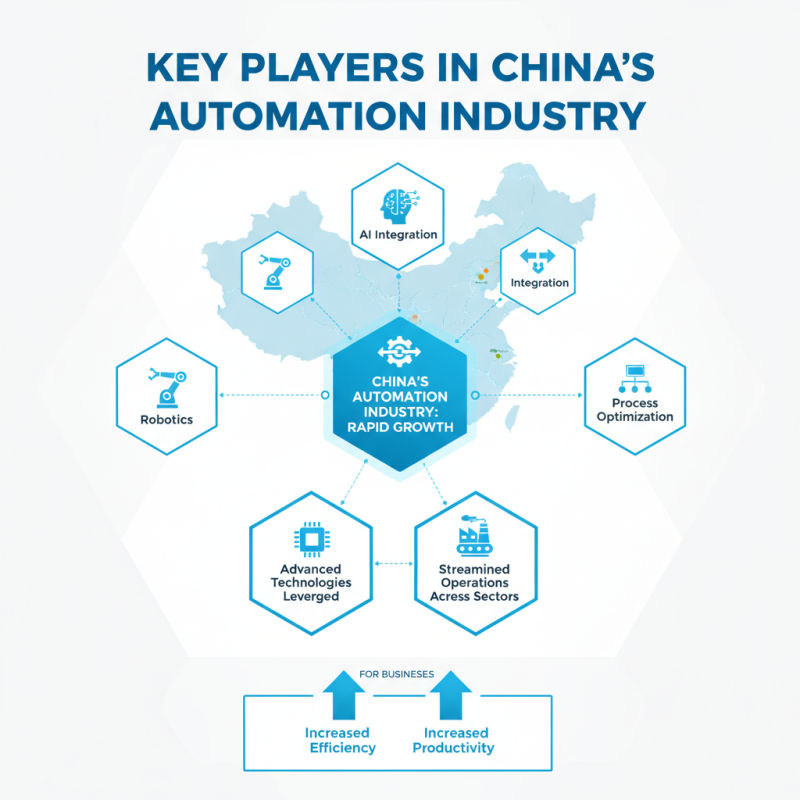
China's automation industry is growing rapidly. Various key players are shaping this landscape. These companies offer crucial services, including robotics, AI integration, and process optimization. They leverage advanced technologies to streamline operations across sectors. This results in increased efficiency and productivity for businesses.
Notably, some companies have made significant strides in developing automation solutions. They emphasize precision and reliability in their products. However, some enterprises face challenges in scaling their innovations. Maintenance and adaptability issues can also arise. These factors highlight the need for continuous learning and improvement within the industry.
The competition is intense. New entrants are constantly emerging, offering fresh perspectives. This dynamic environment encourages established players to innovate further. As a result, collaboration often occurs between companies. Such partnerships can help mitigate weaknesses and capitalizes on strengths. The ongoing evolution of the automation services landscape in China presents both opportunities and challenges.
Top 10 Automation Technologies Transforming Businesses
Automation technologies are revolutionizing how businesses operate. One notable advancement is Robotic Process Automation (RPA). RPA automates repetitive tasks, allowing employees to focus on complex projects. This shift can enhance productivity but may lead to job displacement. Companies need to strategize for workforce transitions.
Another key technology is artificial intelligence (AI). AI algorithms analyze vast amounts of data efficiently. They provide insights into customer behavior, enabling personalized marketing. However, organizations must ensure data privacy and address potential biases in AI systems.
Machine Learning (ML) is also shaping the future of automation. ML models learn from data patterns and improve over time. They help businesses forecast trends, promoting proactive decision-making. Yet, relying heavily on algorithms can sometimes lead to oversight. Businesses should balance automated insights with human judgment.
Top 10 Automation Technologies Transforming Businesses
Benefits of Implementing Automation Services
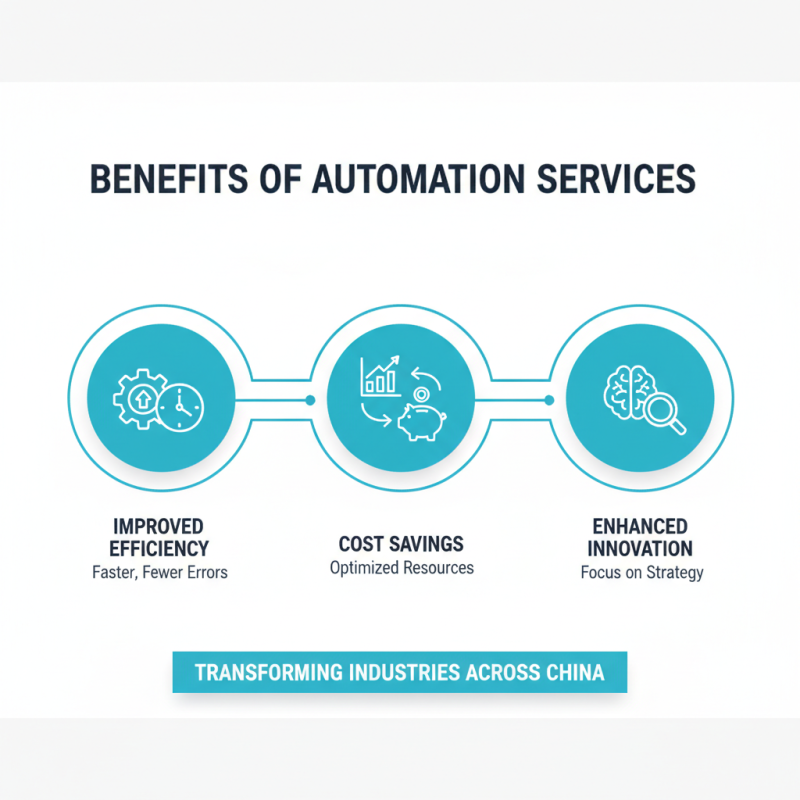
Automation services are transforming industries across China. Many businesses are beginning to recognize the advantages these services offer. Improved efficiency tops the list. When tasks are automated, they are generally completed faster and with fewer errors. This can lead to significant time savings and better resource allocation.
Cost reduction is another key benefit. Automating routine tasks reduces labor costs and minimizes mistakes that could lead to expensive rework. However, companies often overlook the necessity of thorough planning before implementation. A clear strategy is crucial to avoid disruptions during the transition.
When considering automation, ensure proper training for your staff. They need to adapt to new systems. It’s important to maintain a human touch, even in automated processes. Tips to keep in mind: assess your current workflow, identify repetitive tasks, and start with less complex processes. This approach helps ease the transition while maximizing the benefits of automation.
Future Trends in China's Automation Sector
China's automation sector is rapidly evolving. The integration of AI, IoT, and robotics is notable. These technologies are enhancing productivity across various industries. Manufacturing processes are becoming streamlined. This means less waste and improved efficiency.
Automation isn't without its challenges. Many companies struggle with implementation. Skilled labor is often required. Investing in ongoing training is crucial. Tips for businesses: assess your current processes. Identify areas for improvement. Collaborate with experts for tailored solutions.
Moreover, future trends include increased use of machine learning. Companies may embrace virtual reality for training. Sustainability will also shape automation strategies. As technology advances, the landscape will shift. Reflect on your automation strategy to stay competitive.