Top 10 Control Systems You Need to Know About?
In today's fast-paced industrial landscape, understanding control systems is more critical than ever. Recent reports indicate that the global control systems market is expected to reach $250 billion by 2025, growing at a compound annual growth rate (CAGR) of 6.5%. This growth underscores the increasing reliance on automated solutions across various sectors. Control systems play a fundamental role in enhancing operational efficiency, safety, and productivity.
Industries ranging from manufacturing to aviation utilize these systems for precision and reliability. However, not all control systems are created equal. Many businesses struggle with outdated technologies or poorly implemented systems that hinder progress. A recent survey showed that 40% of organizations admit to challenges in integrating modern control systems effectively. This highlights a need for companies to evolve and adapt to stay competitive.
As we explore the top 10 control systems you need to know about, it’s important to reflect on how they can improve not only functionality but also the overall workflow. Adopting the right control systems can bridge the gap between manual processes and automated, intelligent solutions. Each system offers unique benefits and potential pitfalls, urging users to make informed choices for their operational needs.

Overview of Control Systems and Their Importance
Control systems play a crucial role in various industries. They ensure processes run smoothly and efficiently. According to a report by Research and Markets, the global control systems market is projected to reach $269 billion by 2026. This growth highlights their significance in modern technology. Effective control systems enhance operational efficiency and minimize errors.
In the manufacturing sector, control systems regulate machinery and workflows. They help reduce waste and improve product quality. For instance, process automation can increase production rates by up to 30%. Despite their benefits, implementing control systems can be challenging. Companies must invest time and resources to integrate these systems effectively. A lack of skilled professionals often hinders this process.
Moreover, control systems are not infallible. They can fail or produce inaccurate results if not properly maintained. Continuous monitoring and regular updates are necessary to mitigate these risks. Organizations must adapt their strategies to keep up with advancements in technology. This will ensure control systems remain relevant and effective in achieving desired outcomes.
Classification of Control Systems: Open-loop vs. Closed-loop
Control systems are pivotal in automation and engineering. Understanding their classification is essential for effective implementation. Control systems can be categorized into two main types: open-loop and closed-loop.
Open-loop systems operate without feedback. They execute actions based solely on the initial input. For example, a simple irrigation system turns on at a set time, regardless of soil moisture. This may waste resources if conditions change. The precision of open-loop systems is limited. Adjustments must be made manually, leading to inefficiencies.
In contrast, closed-loop systems utilize feedback to adjust their operations. These systems continuously monitor output and modify input based on real-time data. Consider a home heating system that adjusts temperature automatically. It offers higher accuracy and efficiency. However, closed-loop systems can be complex. They require careful design and calibration to operate correctly.
Tip: Ensure you understand the limitations of each system. Choose the appropriate system based on your specific needs. Monitor performance regularly to make necessary adjustments. This proactive approach can enhance system reliability, saving time and resources.
Key Components of Control Systems: Sensors, Controllers, and Actuators
Control systems are vital for modern technology. They rely heavily on three key components: sensors, controllers, and actuators.
Sensors gather data from the environment, translating physical phenomena into signals. For instance, temperature sensors measure heat levels. A fault in a sensor can lead to significant errors, highlighting the need for regular calibration.
Controllers analyze input from sensors and make decisions based on predefined criteria. They serve as the brain of the system, processing information and issuing commands to actuators. However, the choice of controller algorithms can be flawed, depending on the complexity of the task. This requires engineers to understand the potential pitfalls and ensure robustness in their designs.
Actuators are responsible for executing commands from the controller. They convert electrical signals into physical motion, making systems responsive. A malfunctioning actuator can result in delayed responses or inaccurate movements. There must be a balance between speed and accuracy. Recognizing these components’ interdependencies is critical for creating efficient and reliable control systems.
Top 10 Control Systems: Applications in Various Industries
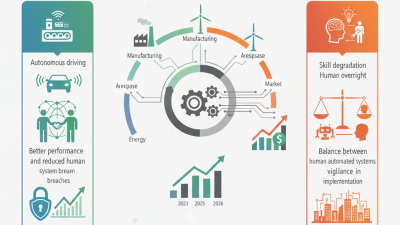
Control systems play a crucial role in various industries, enhancing efficiency and precision. In manufacturing, for example, control systems optimize production lines. According to a report by Research and Markets, the global industrial automation market is projected to reach $300 billion by 2026. This growth is driven by advancements in technology and the increasing need for automation.
In the energy sector, control systems monitor and manage power generation and distribution. The International Energy Agency indicates that digital technologies can enhance energy efficiency by 10-30%. Implementing these systems can lead to significant cost savings. Automation in renewable energy, such as wind and solar, has also increased, showcasing an industry shift.
Tips: Regular maintenance of control systems is vital. Ensure systems are updated and calibrated. This minimizes errors and enhances performance. Consider training operators. Well-trained personnel can better manage unexpected challenges.
In the healthcare sector, control systems ensure precision in medical devices. As per the latest insights, the global medical device market is expected to exceed $500 billion by 2025. With the rise of telemedicine, new control systems are pivotal for remote monitoring. Nonetheless, technical failures can lead to serious consequences, necessitating continuous improvement and vigilance.
Top 10 Control Systems Applications in Various Industries
Future Trends in Control Systems: Innovations and Technologies to Watch
The landscape of control systems is evolving rapidly. Innovations in automation and artificial intelligence are reshaping how industries operate. These trends are not just about efficiency; they are redefining precision and responsiveness. Real-time data processing is becoming essential. Systems that can adapt instantly to changing conditions are paving the way for smarter operations.
One notable trend is the integration of machine learning. This technology allows systems to learn from data continuously. It can optimize processes without human intervention. However, reliance on these systems raises questions about accountability. As machines take over decision-making, the need for ethical guidelines grows. Understanding this balance is crucial for future developments.
Another area to watch is decentralized control systems. These systems enhance resilience against failures. In a world increasingly affected by cyber threats, this approach might be a game-changer. Yet, it is a complex shift that requires us to rethink traditional control models. The conversations around these topics are just beginning, but they are critically important for the future of technology.
Top 10 Control Systems You Need to Know About
| Control System |
Key Features |
Applications |
Future Trends |
| PID Controller |
Proportional, Integral, Derivative control |
Industrial automation |
Adaptive control methods |
| Fuzzy Logic Control |
Handles uncertainty and imprecision |
Consumer electronics, HVAC |
Integration with AI |
| Model Predictive Control |
Utilizes a model for predicting future behavior |
Chemical processing, energy systems |
Handling complex systems |
| Robust Control |
Maintains performance under uncertainty |
Robotics, flight control |
Greater focus on safety |
| Networked Control Systems |
Control over large distances |
Telecommunications, smart grids |
Advancements in IoT |
| Distributed Control Systems |
Decentralized control architecture |
Manufacturing, process control |
Cloud-based operations |
| Neural Network Control |
Learning from data |
Complex pattern recognition |
Deep learning integration |
| Sliding Mode Control |
Robust against disturbances |
Automotive systems |
Improved control strategies |
| Event-Triggered Control |
Triggered by specific events |
Networked systems |
Efficiency in resource use |