Top Automatic Systems Transforming Industries Today?
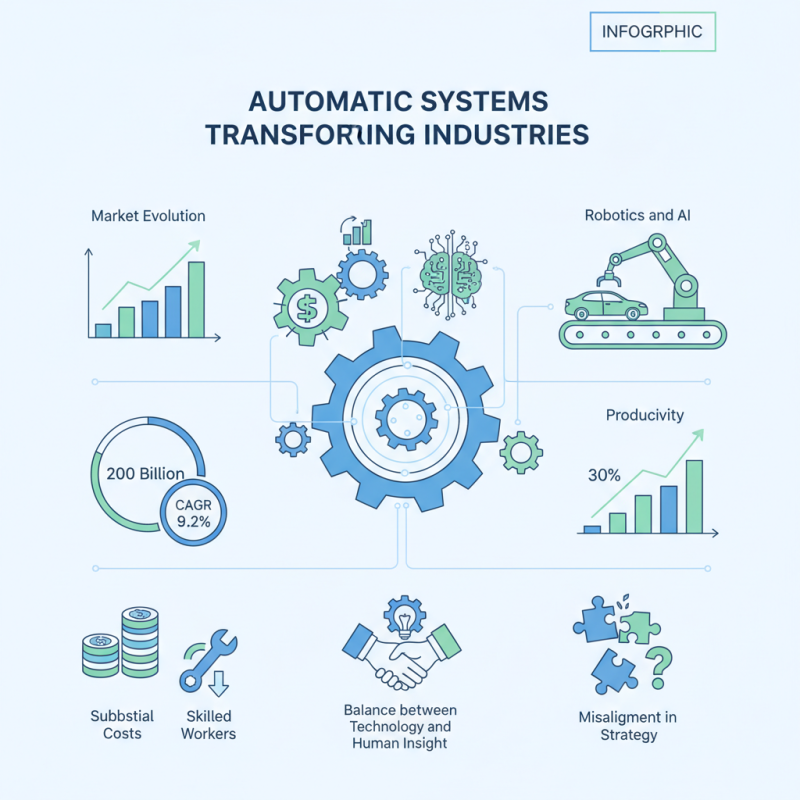
As industries evolve, automatic systems are reshaping how businesses operate. In 2022, the global market for automation reached $200 billion. Reports show this sector is expected to grow at a CAGR of 9.2% from 2023 to 2028. These systems enhance efficiency and reduce human error, providing critical advantages.
Manufacturers are investing heavily in robotics and AI. For example, the automotive sector sees a 30% increase in productivity with automation. However, the integration of automatic systems isn’t without challenges. Companies face substantial costs and require skilled workers to manage these new technologies. Misalignment in strategy can lead to substantial losses.
Overall, while automatic systems are transforming industries, they also necessitate careful planning and adaptation. Achieving success with automation demands a balance between technology and human insight.
Top Automatic Systems Revolutionizing Manufacturing Processes Today
The manufacturing industry is undergoing a significant transformation. Automatic systems are now a crucial part of daily operations. These systems enhance efficiency and reduce human error. Surprisingly, not all implementations meet expectations. Some systems struggle with integration into existing processes.
One of the key areas of revolution is robotics. Robots can take over repetitive tasks. They increase production speed and provide consistency. Yet, they sometimes fail to adapt to unexpected changes in production lines. This can lead to delays and additional costs.
Another important system is machine learning. It analyzes data to optimize workflows. This technology helps in predictive maintenance, reducing downtime. However, it is not foolproof. Misjudgments can occur, leading to operational hiccups. The challenge lies in refining these systems for smoother operations. Continuous feedback loops are essential for improvement.
Top Automatic Systems Revolutionizing Manufacturing Processes Today
This chart displays the impact level of various automated systems redefining manufacturing processes today, rated on a scale from 1 to 10. Each system plays a crucial role in enhancing efficiency and productivity in modern manufacturing.
Impact of Robotics on Production Efficiency and Cost Reduction
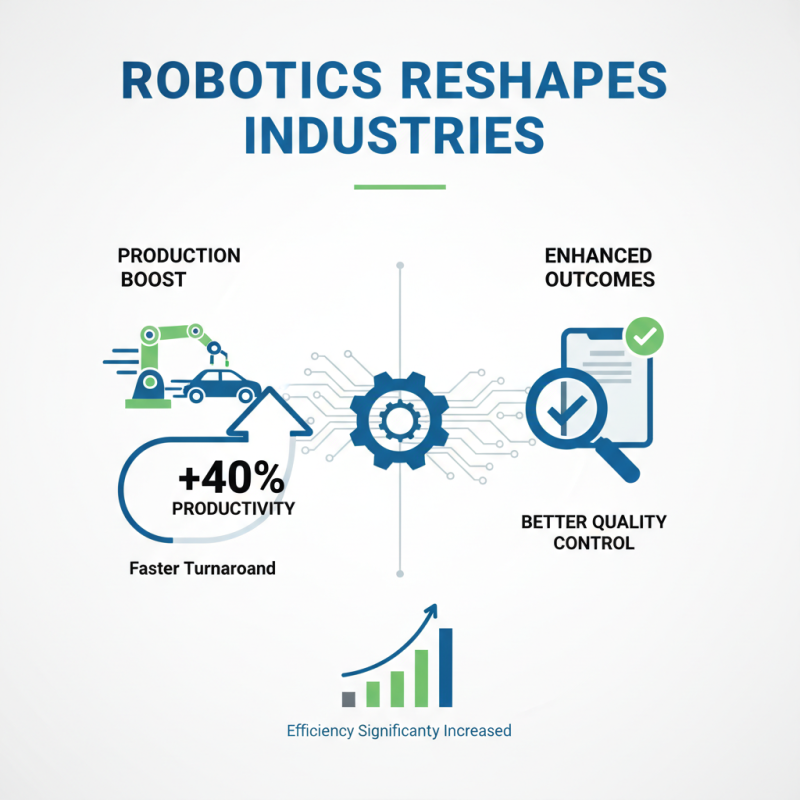
Robotics is reshaping industries, especially in production. Automation technology boosts efficiency significantly. Recent studies show that companies adopting robotics can increase productivity by up to 40%. This allows for faster turnaround times and better quality control.
However, not all implementations are seamless. Many companies face challenges in integration. Training employees to work alongside robots is vital. A report from the International Federation of Robotics indicates that 60% of firms experience operational hiccups during transitions. The costs can overshadow expected savings at first. While robotics can reduce labor costs, initial investment remains a concern.
Despite these hurdles, the long-term benefits are compelling. Businesses report a 30% decline in operational costs after full integration of robotic systems. Enhanced production capabilities offer a competitive edge. Yet, the potential for job displacement raises ethical questions. Balancing technology and human employment needs careful consideration.
How AI-Powered Automation is Transforming Supply Chain Management
AI-powered automation is significantly reshaping supply chain management.
Traditional approaches relied heavily on manual labor, leading to inefficiencies and errors. Today, automated systems analyze vast data sets
faster and more accurately. This real-time data enhances decision-making
and improves responsiveness to market dynamics.
Smart algorithms can track inventory levels, predict demand, and optimize logistics. For instance, AI can suggest the best routes for delivery trucks,
saving time and fuel. However, the reliance on technology raises concerns about data security
and job displacement.
Additionally, the shift to automation can create challenges. Not all businesses can adapt swiftly. Smaller companies may struggle with the costs
of implementation. They may miss opportunities to streamline processes. Balancing automation with human oversight remains crucial. While AI can provide
valuable insights, human intuition and flexibility cannot be entirely replaced.
The Role of IoT in Enhancing Industrial Operations and Data Analysis
The Internet of Things (IoT) is revolutionizing industrial operations. Its ability to connect machines and gather data enables smarter decision-making. Real-time data analysis helps identify inefficiencies. Industries can now save costs and increase productivity.
Tips: Focus on data accuracy. Ensure sensors are calibrated correctly. Regular maintenance of devices helps avoid errors.
IoT facilitates predictive maintenance. By analyzing data from machines, businesses can anticipate failures. This approach reduces downtime and extends equipment life. However, not all systems adapt well to IoT integration. Some legacy systems pose challenges. Understanding limitations is crucial for success.
Tips: Start small with IoT solutions. Test integrations on less critical systems first. Learn from setbacks and scale gradually.
Top Automatic Systems Transforming Industries Today
| Industry |
IoT Application |
Benefits |
Data Analysis Tools |
Impact |
| Manufacturing |
Predictive Maintenance |
Reduced Downtime |
Machine Learning |
Increased Efficiency |
| Transportation |
Fleet Management |
Cost Optimization |
Real-time Analytics |
Improved Logistics |
| Healthcare |
Remote Patient Monitoring |
Better Patient Care |
Data Visualization |
Enhanced Outcomes |
| Agriculture |
Smart Farming |
Higher Crop Yield |
Predictive Analytics |
Sustainable Practices |
| Retail |
Inventory Management |
Reduced Waste |
Customer Insights Analysis |
Increased Sales |
Advancements in Autonomous Vehicles and Their Industry Applications
Advancements in autonomous vehicles are reshaping various industries. By 2025, the global market for autonomous vehicles is expected to exceed $60 billion, according to industry reports. This growth is driven by technology improvements and increasing demand for efficient transportation solutions.
In logistics, companies are adopting autonomous trucks. These vehicles can operate 24/7, reducing delivery times significantly. However, challenges remain. Safety and regulatory hurdles are barriers to widespread adoption. A recent study indicated that 20% of logistics firms faced difficulties integrating this technology.
In agriculture, autonomous machinery has shown great promise. It can perform tasks like planting and harvesting with high precision. This reduces labor costs and increases yield. Yet, only 15% of farms currently utilize this technology fully. Many still rely on manual labor due to high initial investment costs. Continuous innovation is necessary for broader acceptance.