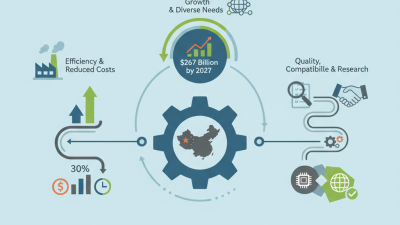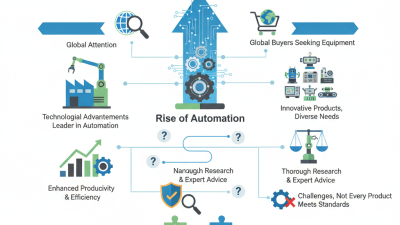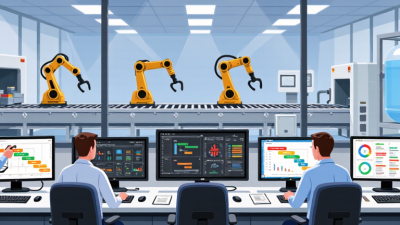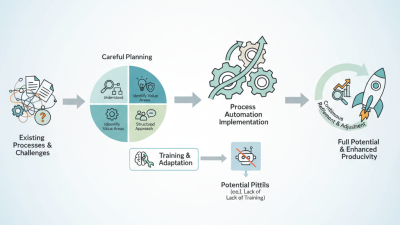
China’s industrial robot market is entering a more demanding stage in 2026. Manufacturers now compete beyond price, offering faster deployment, stronger software, and better after-sales support. This guide examines the China Top 10 Industrial Robot Manufacturers 2026 through practical industry criteria.
The evaluation considers robot payload, repeatability, working range, cycle performance, controller stability, and programming flexibility. It also reviews applications in welding, assembly, palletizing, machine tending, and electronics production. Factory buyers need more than attractive specifications. They need reliable integration, accessible spare parts, trained engineers, and responsive technical service. Small details matter. A stable cable system can reduce downtime. Clear software can shorten operator training.
Public product information, company disclosures, customer cases, and independent industry sources should support each assessment. However, no ranking is permanently objective. Product lines change, regional service quality differs, and advertised performance may depend on controlled testing conditions. Some manufacturers perform strongly in automotive plants but have limited experience with smaller factories. Others offer competitive collaborative robots but fewer high-payload solutions. That difference deserves attention.
This introduction sets a practical framework for comparing China’s leading industrial robot suppliers in 2026. Readers can expect a balanced view of capabilities, applications, advantages, and limitations. The goal is not to promote the loudest brand. It is to help manufacturers match robot technology with production needs, workforce skills, budget limits, and long-term reliability expectations. Data should be checked before major purchasing decisions.
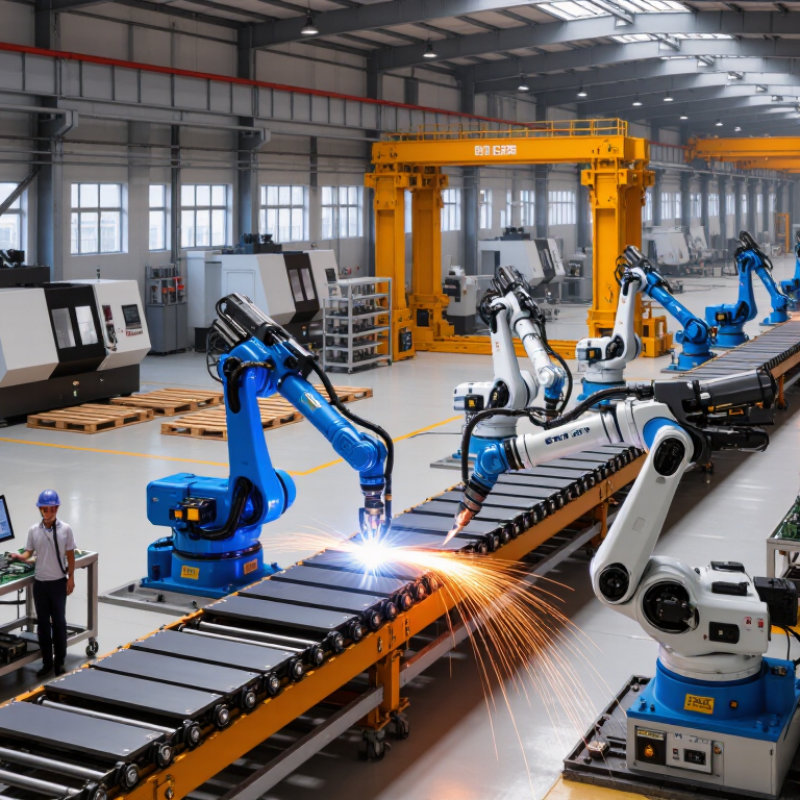
China’s industrial robot industry in 2026 is shifting from rapid installation to measurable factory performance. Manufacturers are competing on motion accuracy, response speed, software compatibility, and after-sales support. The strongest suppliers now design robots for welding, assembly, packaging, palletizing, and material handling. Practical results matter more than showroom demonstrations.
On a typical production line, a robot may repeat the same movement thousands of times daily. A small calibration error can create rejected parts, downtime, or unsafe contact. Engineers therefore examine payload capacity, operating reach, cycle time, protective functions, and maintenance access. Local technical teams also help factories connect robots with vision systems, sensors, and production software.
The market is not perfect. Some suppliers still depend heavily on imported control components. Others offer attractive hardware but limited integration guidance. A lower purchase price may hide training costs or difficult repairs. Buyers should request factory references, failure records, spare-part plans, and realistic test results. Human operators remain essential, especially during changeovers and unexpected faults. The next stage will depend on reliable service, open interfaces, energy efficiency, and safer collaboration between people and machines.
China Top 10 Industrial Robot Manufacturers 2026
How the Top 10 Manufacturers Are Selected and Compared
Selecting the top ten requires more than checking annual sales. We examine production capacity, engineering depth, product reliability, and after-sales support. Factory audits can reveal details that brochures often miss, such as cable protection, assembly cleanliness, and testing procedures. We also review public certifications, delivery records, patent activity, and customer feedback from automotive, electronics, logistics, and metalworking projects.
Performance is compared through measurable factors. These include payload range, repeatability, cycle time, energy use, controller stability, and integration with vision or conveyor systems. Service coverage matters too. A technically strong robot loses value when spare parts arrive slowly or technicians lack training. We use weighted scoring rather than a popularity contest. Still, the weighting is not perfect. A smaller manufacturer may serve demanding applications better than a larger supplier, but limited public data can make that difficult to verify.
Tips: Ask for test results under real working conditions. Check performance at high speed, not only at idle. Request references from factories with similar workloads. Compare the full ownership cost, including programming, maintenance, training, and downtime. Document every claim and confirm it with independent evidence. A polished demonstration is useful, but it is not proof.
| No. | Comparison Dimension | Weight | How It Is Measured | Relevant 2026 Screening Benchmark | Evidence Required |
|---|---|---|---|---|---|
| 1 | Product Portfolio Breadth | 15% | Coverage of articulated, SCARA, delta, palletizing, welding, collaborative, and heavy-payload robot categories. | At least 4 major industrial robot categories, with documented payload, reach, and application specifications. | Official product catalogues and technical datasheets. |
| 2 | Payload and Reach Coverage | 12% | Range of rated payloads and horizontal reaches available for common manufacturing tasks. | Coverage from approximately 3–20 kg for general automation, plus at least one model above 50 kg for heavy-duty applications. | Published payload curves and reach diagrams. |
| 3 | Positioning Repeatability | 10% | Comparison of manufacturer-stated pose repeatability under the applicable test conditions. | Up to ±0.02 mm for precision models; up to ±0.05 mm for general-purpose models, depending on robot class. | Technical specifications and test methodology. |
| 4 | Compliance and Safety | 12% | Verification of conformity documentation, risk assessment support, and safety functions for robot systems. | Clear alignment with ISO 10218 requirements; collaborative applications should also address ISO/TS 15066 guidance where applicable. | Declarations, certificates, manuals, and safety documentation. |
| 5 | Controller and Integration Capability | 10% | Support for industrial communication, programmable interfaces, external axes, vision systems, and end-of-arm tooling. | Support for common industrial networks such as EtherNet/IP, PROFINET, Modbus TCP, or equivalent integration methods. | Controller manuals, protocol lists, and integration case records. |
| 6 | Manufacturing and Delivery Capability | 10% | Assessment of production capacity, standard lead times, spare-parts availability, and project delivery consistency. | Documented production facilities, repeatable delivery processes, and published service or spare-parts procedures. | Factory information, delivery records, and service policies. |
| 7 | After-Sales Service Network | 10% | Availability of installation, commissioning, preventive maintenance, troubleshooting, and operator training. | Service coverage in key Chinese manufacturing regions, supported by documented response and escalation procedures. | Service-centre records, training programmes, and support terms. |
| 8 | Application Experience | 8% | Depth of verified deployments in automotive, electronics, metalworking, logistics, food, and general manufacturing. | Documented projects in at least 3 major application sectors, including measurable cycle-time or quality outcomes where available. | Reference projects and end-user verification. |
| 9 | Total Cost of Ownership | 7% | Evaluation of acquisition cost, installation, programming, maintenance, energy use, spare parts, and expected service life. | Transparent quotation structure with identifiable costs for the robot, controller, software, warranty, and maintenance. | Itemised quotations and warranty documentation. |
| 10 | Innovation and Product Roadmap | 6% | Assessment of software updates, digital monitoring, machine vision, force control, energy efficiency, and collaborative automation. | Demonstrable investment in software capability, connectivity, intelligent sensing, and product updates during the review period. | Product updates, software documentation, and dated technical releases. |
| Total Evaluation Weight | 100% | Manufacturers are compared only after their technical, commercial, compliance, and service evidence has been reviewed. | |||
China’s top 10 industrial robot manufacturers reflect the country’s broad automation capabilities. Their portfolios cover articulated robots, SCARA systems, palletizers, welding units, and collaborative models. These machines serve automotive, electronics, metalworking, logistics, and pharmaceutical production.
A reliable comparison should examine payload, reach, repeatability, cycle time, and protection ratings. A six-axis robot may handle 200 kilograms, while a compact SCARA unit can place components within milliseconds. Controller compatibility also matters. Support for EtherCAT, PROFINET, and common vision systems reduces integration delays. On-site service is equally important. Spare parts, technician training, and software updates often determine real factory performance.
Numbers can mislead. A low purchase price may hide expensive programming work or limited support coverage. Manufacturers with strong engineering teams usually provide simulation tools, safety functions, and application testing before delivery. Yet even capable suppliers may struggle with complex welding surfaces or unstable production data. Buyers should request sample tests using their actual parts, fixtures, and takt times. Factory acceptance tests offer useful evidence, but they cannot predict every maintenance problem. A careful review of China’s leading ten manufacturers should therefore balance technical specifications, field reliability, export experience, and long-term service quality. Proof matters more than polished brochures.
China Top 10 Industrial Robot Manufacturers 2026
China’s industrial robot sector now covers several core machine types. Articulated robots handle welding, painting, assembly, and palletizing. SCARA robots suit fast electronic assembly. Delta robots pick lightweight products at high speed. Cartesian systems offer stable movement across large workspaces. Collaborative robots add flexible handling near human operators, but their safety limits need careful validation.
The International Federation of Robotics reported 276,288 industrial robot installations in China during 2023, representing about 51% of global installations. Its World Robotics 2024 report also recorded 470 robots per 10,000 manufacturing employees in China. These figures show strong adoption, not automatic productivity. Real performance depends on cycle time, maintenance access, operator training, and integration quality.
Core technologies include machine vision, force sensing, high-precision servo drives, digital twins, and artificial-intelligence-assisted programming. Vision-guided systems inspect battery cells, electronic parts, and packaged goods. Force control supports delicate insertion and polishing. In automotive and new-energy factories, robots manage welding, assembly, coating, and material transfer. Electronics plants demand smaller robots and tighter repeatability. Logistics operations increasingly combine robotic arms with autonomous mobile platforms. A top-ten ranking can still mislead. Public data often compares shipments, not uptime, energy use, or service response. These gaps deserve more attention in 2026.
In 2026, China’s industrial robot market is shifting from rapid installation to measured productivity. Leading manufacturers now compete on integration, uptime, and lifecycle support. Demand remains strong in automotive, electronics, metalworking, logistics, and battery production. Collaborative robots are entering smaller factories, where floor space and skilled labor are limited. Yet adoption is not automatic. A robot arm beside an idle conveyor solves little.
Purchasers should begin with the process, not the catalogue. Record cycle time, payload, reach, accuracy, washdown exposure, and daily operating hours. A six-axis unit may suit welding, while a delta system fits high-speed picking. Check controller compatibility, safety functions, spare-part availability, and local service response. Ask for a production trial using real workpieces. Clean demonstrations can hide vibration, reflective surfaces, or inconsistent part placement. Request total cost estimates covering tooling, programming, training, energy, maintenance, and downtime. The cheapest quotation often becomes expensive after commissioning.
In 2026, buyers will also assess software openness and data access. Robots increasingly connect with vision systems, digital production records, and predictive maintenance platforms. Cybersecurity deserves practical attention, including account controls, update procedures, and network separation. Standards and workplace rules must be verified for each installation and location. Do not trust every efficiency claim. Independent testing, documented acceptance criteria, and references from similar factories provide stronger evidence. I have seen projects fail because operators were consulted too late. That lesson remains uncomfortable.
| Cookie | Duration | Description |
|---|---|---|
| cookielawinfo-checkbox-analytics | 11 months | This cookie is set by GDPR Cookie Consent plugin. The cookie is used to store the user consent for the cookies in the category "Analytics". |
| cookielawinfo-checkbox-functional | 11 months | The cookie is set by GDPR cookie consent to record the user consent for the cookies in the category "Functional". |
| cookielawinfo-checkbox-necessary | 11 months | This cookie is set by GDPR Cookie Consent plugin. The cookies is used to store the user consent for the cookies in the category "Necessary". |
| cookielawinfo-checkbox-others | 11 months | This cookie is set by GDPR Cookie Consent plugin. The cookie is used to store the user consent for the cookies in the category "Other. |
| cookielawinfo-checkbox-performance | 11 months | This cookie is set by GDPR Cookie Consent plugin. The cookie is used to store the user consent for the cookies in the category "Performance". |
| viewed_cookie_policy | 11 months | The cookie is set by the GDPR Cookie Consent plugin and is used to store whether or not user has consented to the use of cookies. It does not store any personal data. |