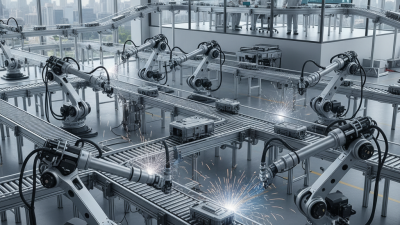
China has become a major source of industrial automation solutions for factories worldwide. Its manufacturers serve automotive, electronics, food processing, logistics, and renewable energy projects. Their portfolios often include PLC control panels, robotic arms, servo drives, machine vision systems, and MES software.
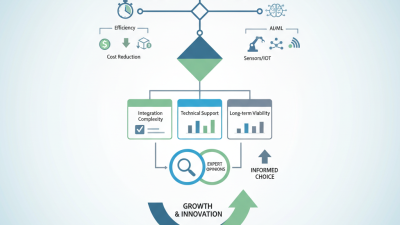
This guide examines China’s top industrial automation solutions manufacturers through practical buying criteria. We consider engineering experience, product reliability, integration capability, after-sales support, and international compliance. A capable supplier should explain cycle times, maintenance intervals, spare-part availability, and system compatibility. Factory evidence matters. Look for clear wiring diagrams, tested control cabinets, documented safety functions, and real commissioning records.
Details reveal quality.
A strong manufacturer can adapt a conveyor line after production data exposes a bottleneck. It can also train operators beside the machine, not only provide a digital manual. However, no ranking can guarantee success for every plant. Public case studies may hide downtime, integration delays, or software limitations. Buyers should request reference projects with similar materials, speeds, and working conditions.
This overview aims to support a careful and informed shortlist. It does not treat low price as proof of value. Total cost includes installation, programming, validation, upgrades, and service response. Some suppliers communicate technical capabilities clearly, while others require deeper questioning. That difference deserves attention. By comparing proven performance with transparent documentation, readers can identify partners suited to safer, more efficient, and scalable production.
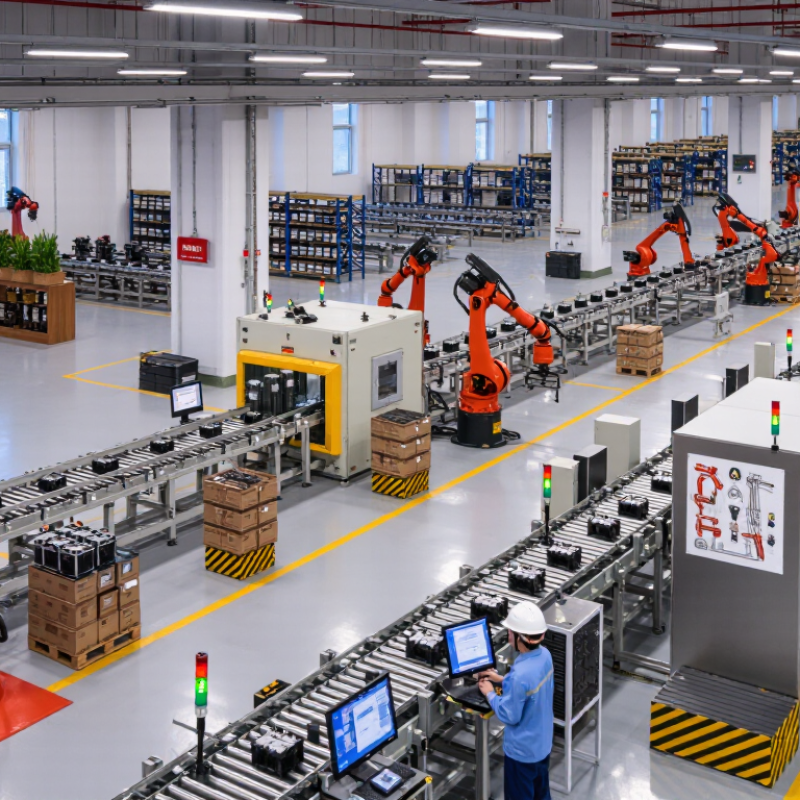
China’s industrial automation solutions cover technologies that monitor, control, and improve factory operations. Their scope includes sensors, programmable controllers, industrial networks, motion systems, machine vision, robotics, and production software. These tools connect physical equipment with production data.
In a typical workshop, a sensor measures motor temperature while a controller adjusts speed within milliseconds. A vision system checks metal parts for surface defects under steady lighting. Manufacturing execution software records output, downtime, energy use, and maintenance events. Solutions may serve electronics, automotive components, food processing, chemicals, logistics, and other sectors. The right design depends on process risk, product variation, workforce skills, and local safety requirements.
Practical experience shows that automation is not simply equipment installation. Engineers must study cable routes, dust, heat, network interruptions, and operator habits before selecting hardware. Chinese factories often combine new control systems with older machines, creating integration gaps and inconsistent data. That weakness is easy to underestimate. Maintenance training, spare-part planning, cybersecurity controls, and documented testing need equal attention. Some projects promise fast returns without measuring labor, scrap, or energy costs. That approach deserves reconsideration. Reliable manufacturers should provide application evidence, clear specifications, commissioning support, and traceable service records. Expertise means fitting technology to a real production line, not displaying the most advanced device.
Industrial automation solutions in China cover robotics, motion control, machine vision, industrial control systems, sensors, and production software. Industrial robot installations are used here as a measurable indicator of automation adoption. China remained the world's largest annual market for industrial robot installations from 2019 to 2023.
Source: International Federation of Robotics, World Robotics reports. Figures represent annual industrial robot installations in China, not the total value of the industrial automation solutions market.
China’s industrial automation manufacturers increasingly combine PLCs, motion controllers, and industrial Ethernet in one coordinated production system. These technologies control conveyor timing, motor speed, robotic movement, and emergency shutdowns with millisecond-level responses. A typical packaging line may use sensors to detect bottle position, while a vision system checks labels under bright LED lighting. The HMI then displays faults in clear, practical screens for operators.
SCADA platforms collect production data from machines, energy meters, and quality stations. Edge computing can process this information near the equipment, reducing delays and unnecessary cloud traffic. Artificial intelligence also supports predictive maintenance by identifying unusual vibration or temperature patterns before a motor fails. Digital twins help engineers test cycle times and layout changes virtually. However, no model perfectly reflects a dusty workshop or an aging sensor. Careful commissioning and regular calibration remain essential.
Tips: Check communication compatibility before purchasing equipment. Use shielded cables near high-power motors. Keep alarm messages specific, not vague. Train operators with real fault examples. A small pilot line often reveals wiring, timing, and usability problems earlier than a full factory rollout. Document every parameter change. It may feel slow, but undocumented adjustments can complicate maintenance later. Safety circuits should be independently verified by qualified personnel, especially when robots, presses, or automated guided vehicles share working areas.
Industrial automation solution providers now fall into several practical categories. Component specialists supply PLCs, sensors, drives, and safety controls for focused upgrades. Robotics and machine-vision providers support repetitive handling, inspection, and palletizing. System integrators connect these technologies with production lines, electrical panels, software, and operator training. Their value appears on the factory floor: fewer manual handoffs, clearer alarms, and faster changeovers.
Software-led providers add manufacturing execution systems, industrial analytics, and predictive maintenance tools. These platforms collect signals from motors, conveyors, and temperature sensors. They can reveal abnormal vibration before a bearing failure stops production.
The International Federation of Robotics reported 541,302 industrial robots were installed worldwide in 2023, with more than 4.28 million operating globally.
That scale increases demand for integration, cybersecurity, and dependable after-sales support.
Turnkey providers manage design, installation, commissioning, and lifecycle service. They suit factories lacking internal automation engineers. However, a larger package is not always a better solution.
Deloitte’s 2023 Smart Manufacturing survey found that 86% of respondents expected smart manufacturing to become a primary competitiveness driver within five years.
The harder question is measurement. Some projects count connected devices instead of reduced downtime, safer work, or higher yield. Buyers should request pilot results, maintenance response times, training plans, and data ownership terms. Small gaps matter.
Chinese automation manufacturers serve industries that demand different speeds, materials, and safety controls. Electronics factories use robotic assembly, vision inspection, and precise screw fastening. Automotive plants often require welding cells, material handling, and traceable quality records. Food processors need stainless-steel equipment, washdown protection, and accurate filling systems.
Different needs. Different risks.
In pharmaceutical production, automation supports cleanroom transfer, packaging, and batch data collection. Logistics companies use conveyors, sorting machines, and autonomous transport equipment for busy distribution centers. Textile and metal factories often seek motion control, cutting systems, and energy monitoring. Water treatment facilities apply automated dosing, pump control, and remote alarms. These applications require more than hardware. Engineers must understand production flow, maintenance skills, and local compliance requirements.
Practical evaluation should include cycle time tests, fault recovery, spare-part availability, and operator training. A supplier may provide impressive trial data, yet installation conditions can change the result. Dust, humidity, vibration, and inconsistent materials often expose hidden weaknesses. This is where careful site surveys matter. Chinese manufacturers can offer flexible customization and competitive engineering support, but quality varies between projects. Buyers should request documented test results, electrical diagrams, safety assessments, and references from comparable facilities. The strongest partnerships usually involve clear acceptance standards and communication during commissioning, not only a low purchase price.
| Industry Served | Typical Production Processes | Common Automation Solutions | Key Equipment and Systems | Typical Operational Priorities | Relevant Standards and Requirements |
|---|---|---|---|---|---|
| Automotive and Auto Components | Stamping, body welding, painting, powertrain assembly, battery-pack assembly, inspection and end-of-line testing. | Robotic welding Machine vision Traceability Line balancing | Industrial robots, PLC-based control systems, servo presses, conveyors, weld controllers, vision inspection units and manufacturing execution systems. | High repeatability, takt-time control, worker safety, quality traceability and reduced manual handling. | ISO 10218 for industrial robot safety, ISO 13849 for safety-related control systems, and automotive quality-management requirements based on ISO 9001 and industry-specific schemes. |
| Electronics and Electrical Equipment | Printed circuit board assembly, semiconductor-related handling, component placement, soldering, testing, packaging and final inspection. | Precision motion Clean production AOI Data collection | Pick-and-place machines, collaborative robots, dispensing systems, reflow equipment, automated optical inspection, test stations and warehouse interfaces. | Micron-level or sub-millimeter positioning where required, low defect rates, electrostatic discharge control and rapid product changeover. | IEC 61340 for electrostatic discharge control, ISO 14644 for cleanroom classification where applicable, and ISO 9001 quality-management practices. |
| Food and Beverage Processing | Ingredient handling, mixing, filling, sealing, labeling, case packing, palletizing and cold-chain logistics. | Hygienic automation Packaging lines Batch control CIP monitoring | Servo-driven filling machines, weighing systems, checkweighers, metal detectors, vision systems, packaging machines and robotic palletizers. | Food safety, washdown resistance, accurate dosing, packaging consistency, production flexibility and reduced contamination risk. | HACCP principles, ISO 22000 food-safety management, sanitary equipment design and applicable national food-contact regulations. |
| Pharmaceutical and Medical Products | Raw-material dispensing, blending, granulation, tablet or capsule production, sterile filling, labeling, inspection and serialization. | Validated control Cleanroom automation Electronic records Serialization | Process control systems, filling and packaging lines, machine vision, environmental monitoring, robotic handling and electronic batch-record systems. | Product integrity, contamination control, complete batch records, controlled access and repeatable process parameters. | Good Manufacturing Practice principles, ISO 13485 for medical-device quality systems where applicable, ISO 14644 cleanroom requirements and data-integrity controls. |
| Logistics, Warehousing and E-Commerce | Receiving, storage, order picking, sorting, packing, pallet handling, dispatch and inventory cycle counting. | Warehouse automation Robotic picking Sortation Digital tracking | Automated storage and retrieval systems, conveyor systems, autonomous mobile robots, sorters, barcode or RFID readers and warehouse-management software. | High throughput, inventory accuracy, flexible order profiles, safe material flow and integration with enterprise systems. | Functional machine-safety assessment, safe human-robot interaction, electromagnetic compatibility and cybersecurity controls for connected systems. |
| Renewable Energy and Battery Manufacturing | Cell manufacturing, module assembly, welding, coating, lamination, battery-pack assembly, electrical testing and aging. | Precision assembly Laser processing Inline inspection Condition monitoring | Servo systems, laser equipment, dispensing units, robotic assembly cells, formation and testing systems, vision inspection and production-data platforms. | Process consistency, thermal and electrical safety, contamination control, traceability and reliable handling of sensitive materials. | IEC 62619 and related battery-safety requirements where applicable, ISO 9001, electrical safety standards and risk-based machine safeguarding. |
| Chemical and Petrochemical Processing | Continuous reaction, blending, separation, distillation, storage, loading and process-water treatment. | Process control SCADA Safety instrumentation Remote monitoring | Distributed control systems, programmable logic controllers, analyzers, flow and pressure instrumentation, alarm systems and industrial networking. | Stable process conditions, hazardous-area protection, environmental compliance, asset reliability and emergency shutdown capability. | IEC 61508 and IEC 61511 functional-safety principles, hazardous-area equipment requirements, process-safety management and emissions controls. |
| Metal Processing and Machinery | Cutting, forming, machining, casting, heat treatment, surface finishing, assembly and dimensional inspection. | CNC integration Robotic loading Condition monitoring Quality inspection | CNC machine tools, industrial robots, laser or plasma cutters, hydraulic and servo presses, coordinate-measuring equipment and production monitoring software. | Dimensional accuracy, equipment utilization, tool-life management, energy efficiency and reduced exposure to high-temperature or high-force operations. | ISO 12100 machinery risk assessment, ISO 13849 safety controls, electrical equipment safety and applicable pressure-equipment requirements. |
| Textile and Garment Manufacturing | Spinning, weaving, knitting, dyeing, fabric inspection, cutting, sewing, finishing and packaging. | Motion control Fabric inspection Automated cutting Material handling | Servo-driven textile machinery, automated cutting tables, sewing automation, machine-vision inspection, material conveyors and production-monitoring systems. | Consistent fabric quality, reduced material waste, flexible batch production, accurate cutting and improved operator ergonomics. | Machine guarding, electrical safety, textile chemical-management requirements and ISO 9001 quality-management practices. |
| Water, Wastewater and Environmental Services | Water intake, filtration, chemical dosing, biological treatment, sludge handling, disinfection and discharge monitoring. | SCADA Remote telemetry Variable-speed control Alarm management | Programmable controllers, supervisory control systems, pump drives, level and flow meters, online analyzers and energy-monitoring platforms. | Stable water quality, regulatory reporting, energy optimization, pump reliability and rapid response to abnormal conditions. | Local discharge limits, environmental-monitoring rules, electrical safety standards, instrumentation calibration and cybersecurity practices for critical infrastructure. |
| Building Materials and Glass | Raw-material batching, crushing, mixing, forming, firing, coating, cutting, inspection and palletizing. | Batch automation Kiln control Robotic palletizing Energy monitoring | Process-control systems, weigh feeders, temperature controllers, conveying equipment, robotic handling systems and machine-vision inspection. | Stable thermal profiles, accurate formulation, production continuity, dust control, lower energy consumption and consistent product dimensions. | Industrial emissions controls, machinery safety, electrical safety, quality-management systems and applicable construction-product requirements. |
When evaluating China’s industrial automation solution suppliers, inspect engineering evidence, not polished presentations. IFR’s World Robotics 2024 report recorded 276,288 industrial robot installations in China during 2023. This scale shows strong production capacity, but volume alone does not prove integration quality. Request factory acceptance test records, electrical drawings, cycle-time data, and customer references from similar industries. Check whether engineers can explain sensor failures, software alarms, and recovery procedures clearly. Experience matters on the factory floor.
Deloitte’s 2024 Smart Manufacturing and Operations Survey found that 86% of executives view smart manufacturing as a key competitiveness driver. A capable supplier should connect controls, data collection, safety systems, and maintenance planning. Ask about compliance with relevant ISO, IEC, and local electrical requirements. Review cybersecurity practices against NIST SP 800-82 guidance for industrial control systems. Confirm software ownership, remote-access controls, spare-part availability, and response times. A low quotation may hide expensive downtime. That risk deserves calculation.
Tips
Compare total lifecycle cost, not equipment price. Visit a working installation, if possible. Test alarm recovery during acceptance trials. Ask for a written five-year support plan. Do not accept vague claims about artificial intelligence or “zero downtime.” Some suppliers may lack strong English documentation, yet communicate well through drawings and live demonstrations. That is worth considering, but it should not replace formal records, measurable tests, and independent verification.
| Cookie | Duration | Description |
|---|---|---|
| cookielawinfo-checkbox-analytics | 11 months | This cookie is set by GDPR Cookie Consent plugin. The cookie is used to store the user consent for the cookies in the category "Analytics". |
| cookielawinfo-checkbox-functional | 11 months | The cookie is set by GDPR cookie consent to record the user consent for the cookies in the category "Functional". |
| cookielawinfo-checkbox-necessary | 11 months | This cookie is set by GDPR Cookie Consent plugin. The cookies is used to store the user consent for the cookies in the category "Necessary". |
| cookielawinfo-checkbox-others | 11 months | This cookie is set by GDPR Cookie Consent plugin. The cookie is used to store the user consent for the cookies in the category "Other. |
| cookielawinfo-checkbox-performance | 11 months | This cookie is set by GDPR Cookie Consent plugin. The cookie is used to store the user consent for the cookies in the category "Performance". |
| viewed_cookie_policy | 11 months | The cookie is set by the GDPR Cookie Consent plugin and is used to store whether or not user has consented to the use of cookies. It does not store any personal data. |